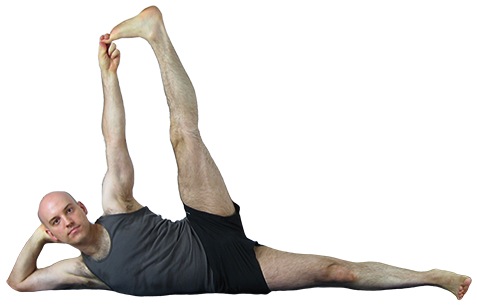
Discourse on Anantasana-Sleeping Vishnu Pose

Anantasana—Sleeping Vishnu Pose
Witold Fitz-SimonCC BY 2.5, via Wikimedia Commons
Anantasana, Sleeping Vishnu Pose, yoga side stretch, yoga for hamstrings, yoga for core strength, yoga balance posture, benefits of Anantasana. 

How to do the Sleeping Vishnu Pose, variations of Anantasana, contraindications, common mistakes, and yoga for beginners.

Discourse on Anantasana (Sleeping Vishnu Pose)

My friends, as you walk along the path of yoga, you discover postures that ground you, postures that challenge you, and postures that invite you into a dance of balance and grace. Today, I wish to guide you into one such asana: Anantasana, also known as the Sleeping Vishnu Pose.

When you first encounter this posture, it may look serene, almost simple—a side-lying stretch, reminiscent of the reclining form of Lord Vishnu resting upon the cosmic serpent. But when you begin to practice, you realize that this pose requires not only strength and flexibility but also focus, patience, and balance.

This discourse will take you on a complete journey through what Anantasana is, how to practice it step-by-step, the benefits of Sleeping Vishnu Pose, the variations you can try, common mistakes to avoid, contraindications, and the deeper meaning hidden in this elegant yoga posture.

Anantasana—side-reclining leg lift
Satheesan.vnCC BY-SA 3.0, via Wikimedia Commons
What Is Anantasana (Sleeping Vishnu Pose)?

The Sanskrit word “Ananta” means “infinite,” and it is also one of the names of the serpent Shesha, upon which Lord Vishnu is said to recline in eternal rest. 

Thus, when you practice Sleeping Vishnu Pose, your body mirrors this cosmic image of rest and infinite balance.

At first glance, Anantasana looks like you are simply lying down. But when you extend your leg upward and balance your body on your side, you realize the depth of the challenge. This posture is a yoga balance posture that integrates strength, stability, and flexibility into one harmonious form.

How to Do Anantasana (Step-by-Step)

Anantasana—Sleeping Vishnu Pose
Witold Fitz-SimonCC BY 2.5, via Wikimedia Commons

To practice Anantasana effectively, you must move with patience and awareness.

  1. Begin by lying on your side.
    Lie on your right side, legs extended, body in a straight line. Place your right arm along the floor.

  2. Support your head.
    Bend your right elbow and rest your head in your right palm. Your forearm should be perpendicular to the floor.

  3. Place your left hand in front.
    For initial stability, you may place your left palm on the floor in front of your chest.

  4. Lift your top leg.
    Bend your left knee and bring it toward your chest.

  5. Hold your big toe.
    Reach with your left hand to grasp the big toe of your left foot using the index and middle fingers.

  6. Extend the leg upward.
    Slowly straighten your left leg toward the ceiling, keeping your grip firm. Balance on your side without collapsing forward or backward.

  7. Find your balance and breathe.
    Stay in the pose for 20–40 seconds, breathing deeply. Keep your gaze soft and steady.

  8. Release with control.
    Gently bring your leg back down, relax your arms, and repeat the posture on the other side.

👉 Pro tip: If holding the toe feels difficult, you may use a yoga strap looped around your foot for support.

Anantasana—Sleeping Vishnu Pose
Witold Fitz-SimonCC BY 2.5, via Wikimedia Commons

Benefits of Anantasana (Sleeping Vishnu Pose)

When you dedicate yourself to practicing Anantasana regularly, you unlock multiple benefits for body, mind, and energy.

1. Improves Balance and Stability

Balancing on your side while holding your leg upward strengthens stabilizing muscles and improves coordination.

2. Stretches Hamstrings and Calves

As you extend your raised leg, you create a deep stretch in your hamstrings and calves, promoting flexibility.

3. Strengthens the Core

Your abdominal muscles work hard to keep your torso stable, building core strength and resilience.

4. Opens the Hips

The lifted leg position increases mobility in the hips, supporting overall flexibility.

5. Enhances Concentration

Balancing in Anantasana requires mental focus, teaching you steadiness and patience.

6. Promotes Relaxation and Calm

Despite the challenge, this yoga side stretch also encourages stillness, embodying the restful energy of Vishnu.

Anantasana—Sleeping Vishnu Pose
Witold Fitz-SimonCC BY 2.5, via Wikimedia Commons

Common Mistakes to Avoid in Anantasana

To gain the full benefits of Sleeping Vishnu Pose, you must avoid common errors:

  • Collapsing the torso forward or backward: Keep your body aligned in a straight line.

  • Locking the knee: Avoid hyperextending your raised leg; maintain a gentle softness.

  • Gripping too tightly: Straining to hold your toe can create tension—use a strap if needed.

  • Holding your breath: Breath is your anchor; never sacrifice steady breathing.

  • Losing alignment of the supporting arm: Keep your elbow directly under your shoulder for stability.
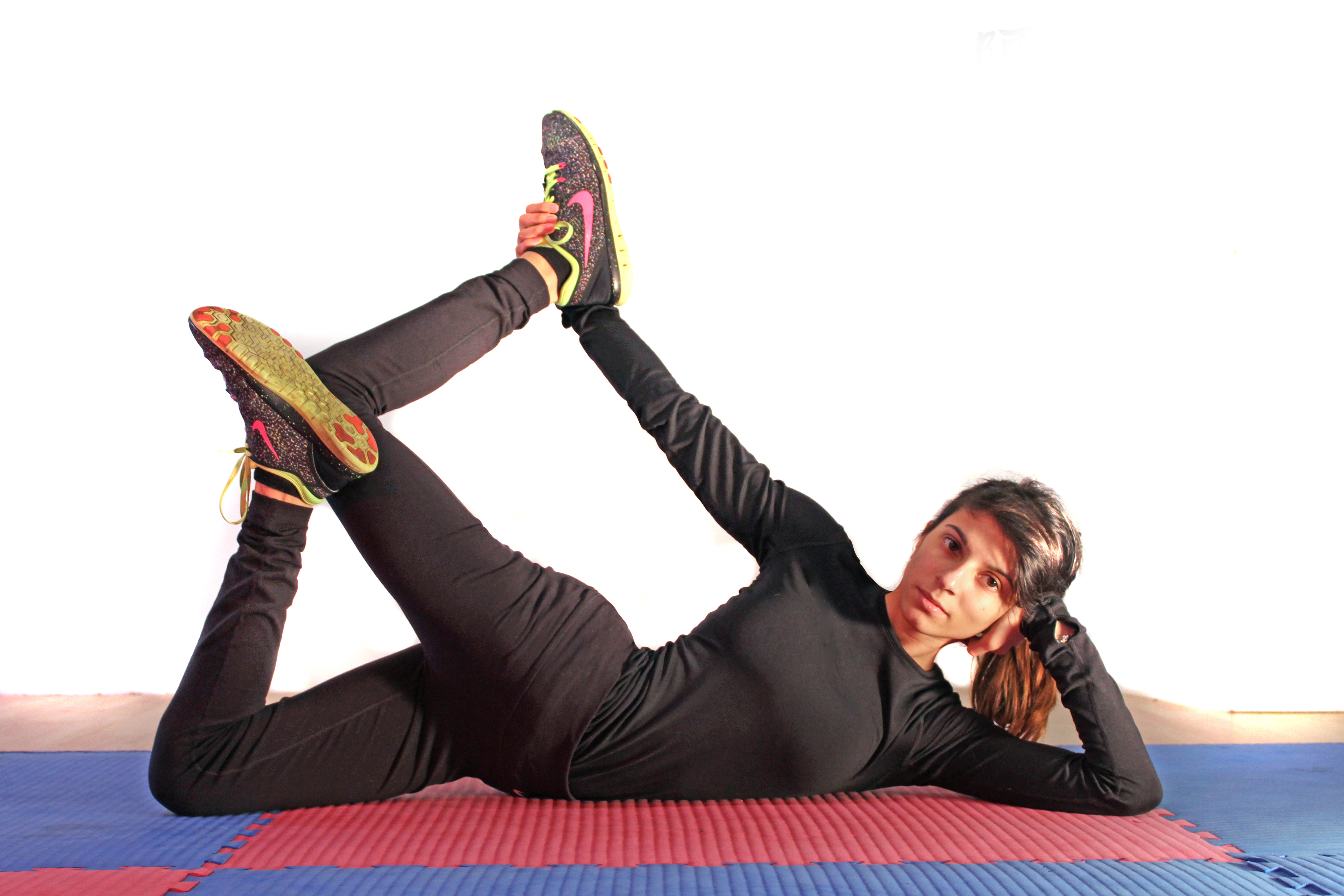
Modification - Anantasana
MielhoneyCC BY-SA 4.0, via Wikimedia Commons
Variations and Modifications of Anantasana

Every yoga posture offers pathways for all levels. You can modify or advance Sleeping Vishnu Pose depending on your needs.

  1. Beginner Variation
    Use a yoga strap around your raised foot to reduce strain while still enjoying the hamstring stretch.

  2. Half-Leg Lift
    Instead of extending the leg fully upward, hold your shin or thigh and keep the leg at a comfortable angle.

  3. Advanced Variation
    Straighten both legs fully and attempt to balance with your upper arm extended overhead, creating a longer line of energy.

  4. Dynamic Anantasana
    Move between lifting and lowering the leg slowly to build strength and flexibility.

Contraindications of Anantasana

While Anantasana is safe for many, it should be avoided or modified in certain conditions:

  • If you have shoulder injuries, supporting your head with the arm may aggravate discomfort.

  • Those with tight hamstrings should practice with props or avoid forcing the leg upward.

  • If you suffer from chronic back pain or balance disorders, approach this pose with caution.

  • Pregnant women should avoid the deep hamstring stretch unless practicing under guidance.

Remember: yoga is never about forcing—it is about listening to your body and adapting with wisdom.

Anantasana—Sleeping Vishnu Pose
Witold Fitz-SimonCC BY 2.5, via Wikimedia Commons

How to Integrate Anantasana Into Your Yoga Practice

You may wonder how to include the Sleeping Vishnu Pose in your daily routine.

  • As a warm-up: Practice Anantasana early to open your hamstrings before deeper forward bends.

  • In a balance sequence: Pair it with other yoga balance postures like Tree Pose (Vrikshasana).

  • As a restorative posture: Practice a gentle variation at the end of your session for calming energy.

  • For flexibility goals: Combine Anantasana with stretches like Seated Forward Bend (Paschimottanasana).

The Deeper Meaning of Sleeping Vishnu Pose

Beyond the physical stretch and balance, Anantasana carries symbolic meaning. When you embody this pose, you align with the energy of Vishnu—serenity, stability, and infinite presence.

The reclining form symbolizes rest amid cosmic motion. In the same way, when you balance in this posture, you learn to remain steady in life’s shifting currents.

Anantasana teaches you that true strength lies not in rigidity but in relaxed stability. It reminds you to face challenges with both focus and ease, honoring the infinite energy within you.

Practical Tips for Success in Anantasana

  • Always warm up with gentle stretches before attempting this posture.

  • Use props freely; a strap or block makes the pose more accessible.

  • Keep your gaze steady at a single point to help maintain balance.

  • Enter and exit the pose slowly—rushing will cause instability.

  • Practice consistently, but with patience; balance and flexibility grow gradually.

Closing Thoughts

My friends, as you practice Anantasana (Sleeping Vishnu Pose), you step into a posture that unites balance, strength, and surrender. Though it may appear gentle, it challenges your focus, stretches your hamstrings, and strengthens your core.

The benefits of Anantasana extend beyond the body—it calms the mind, steadies your breath, and connects you with the infinite energy symbolized by Vishnu.

So the next time you roll out your yoga mat, invite yourself into this posture. Lie on your side, lift your leg toward the sky, and breathe into balance. In that moment, you are not only stretching and strengthening—you are embodying serenity, patience, and infinite potential.

May Sleeping Vishnu Pose remind you always: within balance lies peace, within stillness lies strength, and within your breath lies infinity.

A Discourse on Pranayama, The Art of Yogic Breathing

Yoga practicing Pranayama
Jesús Bonilla "Tanumânasî",
Public domain, via Wikimedia Commons
Discourse on Pranayama: The Art of Yogic Breathing

My friends, when you enter the world of yoga, you quickly learn that it is more than postures, more than stretching, and more than physical strength. 

At the very heart of yoga lies the breath—the rhythm of your life force. And in yoga, the science of breath has a name: Pranayama.

Today, I invite you to journey into the art of Pranayama. You will not only learn what it is, but you will also understand how to practice it, the benefits of Pranayama, the different types of breathing techniques in yoga, the mistakes to avoid, and how you can use breath control to transform your body, mind, and spirit.

What Is Pranayama?

Let us begin with the meaning of the word itself. Prana means life force or vital energy. Ayama means extension or control. When you put them together, "pranayama" means the expansion and regulation of your life force through breath.

You breathe thousands of times a day, often without awareness. But when you consciously regulate your breathing, you tap into a powerful tool that affects not just your lungs but also your nervous system, your emotions, and even your spiritual awareness.

In yoga, Pranayama is not just a warm-up or an accessory—it is a core practice. You use the breath to center yourself, to prepare for meditation, and to balance your energy.

Practicing Pranayama
Pinkpanther0CC BY 4.0,
via Wikimedia Commons
How to Practice Pranayama

If you wish to experience the essence of Pranayama, you must practice with awareness and care. Here is a simple way to begin:

  1. Find a quiet space.
    Sit comfortably on the floor in a cross-legged position, or sit on a chair with your spine tall.

  2. Close your eyes and relax.
    Let your shoulders soften. Rest your hands on your knees.

  3. Focus on natural breathing.
    First, simply observe your breath as it flows in and out without trying to control it.

  4. Introduce gentle regulation.
    Begin by inhaling slowly through your nose, allowing your lungs to fill fully. Then exhale completely, noticing the release.

  5. Practice consistency.
    Set aside 5–10 minutes daily. Over time, you can expand your practice to explore more advanced types of Pranayama.

👉 Pro tip: Always practice Pranayama on an empty stomach, ideally in the morning, when your mind is clear and your body is fresh.

Benefits of Pranayama

Why should you practice Pranayama? Because with every conscious breath, you awaken benefits for your body, mind, and spirit.

1. Reduces Stress and Anxiety

By slowing and deepening your breath, you activate the parasympathetic nervous system. This calms your mind and lowers stress hormones.

2. Improves Lung Function

Pranayama strengthens your respiratory system, increasing oxygen intake and lung capacity.

3. Boosts Energy Levels

When you practice energizing breathing techniques like Kapalabhati or Bhastrika, you awaken vitality and shake off fatigue.

4. Enhances Focus and Clarity

Breath control improves concentration, making Pranayama a powerful tool for meditation and mindfulness.

5. Balances Emotions

Your breath mirrors your emotions. By regulating your breath, you bring balance to your emotional state.

6. Supports Physical Health

Pranayama has been linked to improved circulation, reduced blood pressure, better digestion, and enhanced immunity.

Practicing Pranayama
Pinkpanther0CC BY 4.0,
via Wikimedia Commons

Types of Pranayama

There are many types of Pranayama you can explore, each with its unique effects. Let me share some of the most widely practiced techniques:

  1. Nadi Shodhana (Alternate Nostril Breathing)
    You inhale through one nostril and exhale through the other, alternating sides. This balances the left and right hemispheres of your brain and calms your mind.

  2. Kapalabhati (Skull-Shining Breath)
    A rapid exhalation and passive inhalation technique that detoxifies the lungs and energizes your body.

  3. Bhastrika (Bellows Breath)
    Vigorous inhalations and exhalations that increase energy and clear mental fog.

  4. Ujjayi (Victorious Breath)
    A gentle constriction of your throat as you breathe, creating a soothing oceanic sound. This is often used during yoga postures to maintain focus.

  5. Bhramari (Bee Breath)
    Producing a humming sound as you exhale, this technique soothes your nerves and quiets the mind.

  6. Sheetali and Sheetkari (Cooling Breaths)
    These involve inhaling through the mouth with a rolled tongue or through the teeth, cooling the body and calming heated emotions.

Each technique serves a purpose—some energize, some relax, and some prepare you for meditation.

Common Mistakes to Avoid in Pranayama

As with any practice, mistakes can limit your progress or even cause harm. Be mindful to avoid:

  • Overexertion: Breath should never feel forced or strained. If you feel dizzy, pause immediately.

  • Poor posture: A slouched spine restricts your lung capacity. Always keep your spine tall.

  • Practicing in polluted or stuffy spaces: Fresh air enhances the effectiveness of your breathwork.

  • Skipping the basics: Do not rush to advanced techniques without mastering simple deep breathing first.

  • Inconsistency: Occasional practice yields limited results. Consistency is key.

Practicing Pranayama
Pinkpanther0CC BY 4.0,
via Wikimedia Commons

Contraindications of Pranayama

Though Pranayama is safe for most people, there are situations where you should practice caution:

  • If you have high blood pressure or heart conditions, avoid forceful practices like Bhastrika or Kapalabhati.

  • If you suffer from asthma or respiratory disorders, begin with gentle techniques under guidance.

  • Pregnant women should avoid retention-based breathing practices.

  • If you experience dizziness or discomfort, stop immediately and return to natural breathing.

Always remember: Pranayama is meant to nurture, not to strain.

How to Integrate Pranayama Into Your Daily Life

How do you make Pranayama part of your everyday routine?

  • Morning ritual: Begin your day with 5–10 minutes of Alternate Nostril Breathing to set a calm tone.

  • Pre-meditation practice: Use Ujjayi or Bhramari to prepare your mind for meditation.

  • Midday energy boost: Practice Kapalabhati to shake off drowsiness.

  • Evening relaxation: End your day with slow, deep breathing or Nadi Shodhana to unwind.

By weaving Pranayama into your life, you create balance, focus, and resilience in the face of daily challenges.

The Deeper Meaning of Pranayama

Pranayama is more than a breathing exercise—it is a doorway to inner transformation. When you control your breath, you control your energy. When you control your energy, you influence your mind. And when your mind is steady, you touch the deeper dimensions of your being.

Pranayama connects the physical and the spiritual. It prepares you for meditation, awakens inner awareness, and aligns your body with higher consciousness.

Through Pranayama, you learn that the breath is not just air moving in and out of your lungs—it is life itself. Each inhalation invites vitality, and each exhalation releases what no longer serves you.

Practical Tips for Success in Pranayama

  • Always practice on an empty stomach.

  • Sit comfortably but with an upright spine.

  • Start slow—5 minutes daily—and build gradually.

  • Listen to your body; never push beyond comfort.

  • Combine Pranayama with yoga postures and meditation for a complete practice.

Closing Thoughts

My friends, as you explore Pranayama, remember that it is not just about learning breathing techniques—it is about reclaiming mastery over your life force. Each time you sit with awareness of your breath, you invite health, peace, and clarity.

Through the benefits of Pranayama, you reduce stress, improve energy, balance your emotions, and prepare yourself for meditation. Whether you are a beginner seeking yoga for stress relief or a seasoned practitioner deepening your spiritual path, Pranayama offers a practice for you.

So, I urge you: embrace this gift of breath. Let it guide you to balance. Let it ground you in the present. And let it remind you that life itself begins and ends with the breath.

Take this knowledge with you, practice it daily, and discover for yourself the true power of Pranayama—the ancient science of breath control that awakens your body, steadies your mind, and illuminates your spirit.