 | |
|
INTRODUCTION
When choosing the right workout for your lifestyle, two popular yet distinctly different options often come to mind: Yoga and Zumba.
Both have earned global recognition for their ability to improve health and well-being, but they cater to different fitness needs, personalities, and long-term goals.
Understanding the benefits and unique qualities of each can help you make an informed decision about which routine aligns best with your body, your preferences, and your wellness journey.
Understanding Yoga: Mindful Movement Meets Physical Strength
Yoga is an ancient practice rooted in mindful movement, breath control, and mental focus. It combines physical postures (asanas), breathing techniques (pranayama), and meditation to create a holistic approach to health. Unlike workouts that prioritize intensity and speed, yoga emphasizes balance, flexibility, stability, and self-awareness.
One of the greatest advantages of yoga is its accessibility. People of all ages, body types, and fitness levels can participate, and the practice can be modified to suit individual needs. Whether you engage in slow and restorative styles like Hatha or Yin, or more physically demanding styles like Vinyasa or Ashtanga, yoga adapts to you.
From an emotional and mental standpoint, yoga is highly effective at reducing stress, improving focus, and promoting relaxation. Breathing exercises stimulate the parasympathetic nervous system, which helps lower heart rate, reduce anxiety, and improve sleep. Many people turn to yoga not just for physical fitness but also as part of their stress-management routine.
Physically, yoga enhances joint mobility, posture, core strength, and flexibility. Regular practice can ease muscle tension, improve spinal alignment, and support better balance—benefits especially valuable for those who spend long hours sitting or working at a desk. Because yoga strengthens the body using natural, body-weight movements, it also helps with injury prevention and long-term functional mobility.
Yoga’s low-impact nature means it is gentle on the joints. For individuals recovering from injury or dealing with chronic pain, yoga can be a safe and therapeutic way to stay active. Over time, practitioners often notice improvements not just in physical strength but also in their ability to stay grounded, patient, and mentally calm.
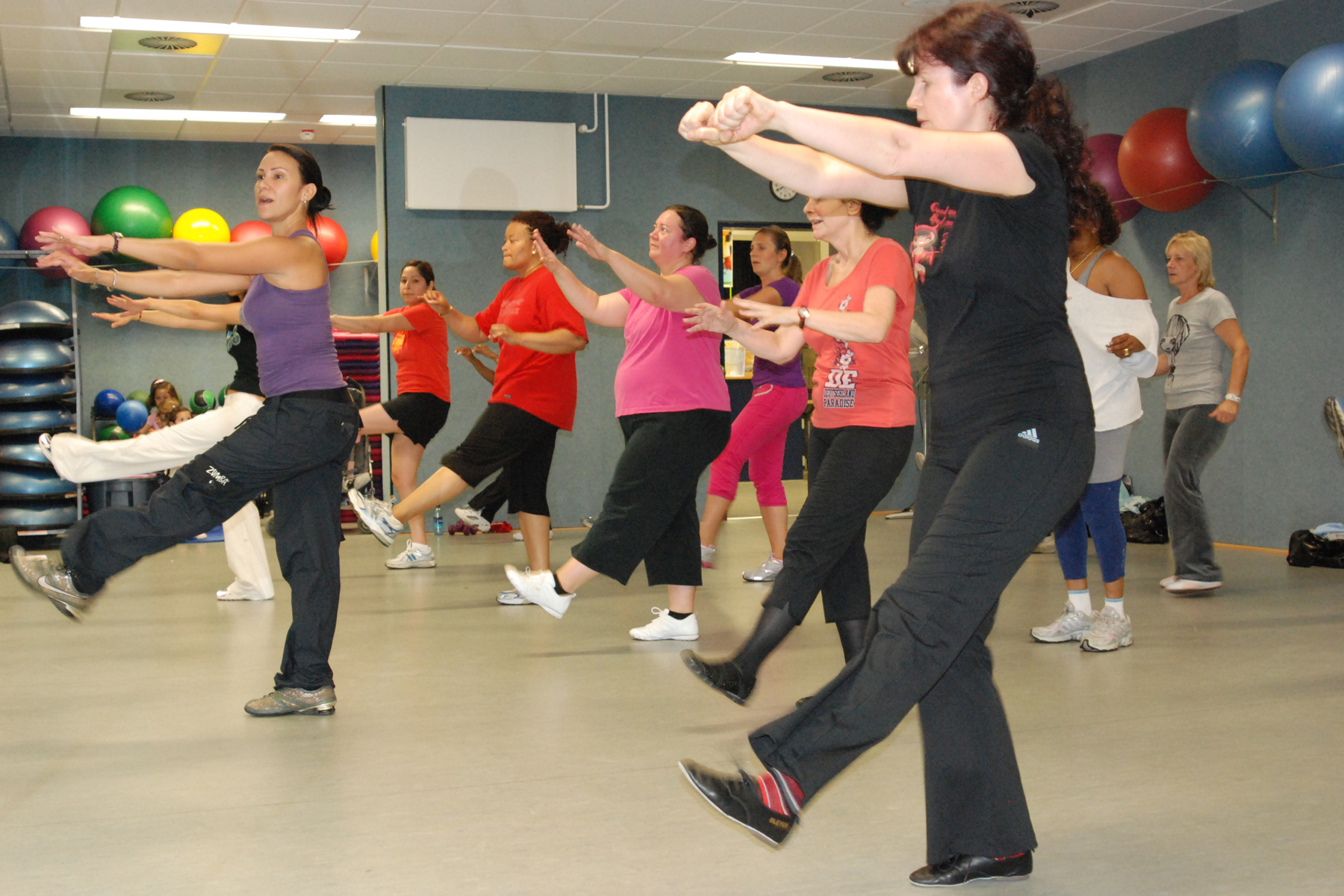
Zumba Dance-cum-Exercise
Brittany Carlson (USAG Stuttgart),
Public domain, via Wikimedia Commons
Understanding Zumba: High-Energy Cardio That Feels Like a Dance Party
Brittany Carlson (USAG Stuttgart),
Public domain, via Wikimedia Commons
In contrast to the slow, intentional pace of yoga, Zumba is a high-energy, dance-based workout that turns exercise into an exhilarating experience.
Created by Colombian dancer and choreographer Beto Pérez, Zumba blends Latin rhythms—such as salsa, merengue, reggaeton, and cumbia—with dynamic aerobic movements. The result is a lively cardio session that feels more like a party than a traditional fitness class.
Zumba’s main appeal lies in its fun factor. Many people struggle to stay consistent with workouts that feel repetitive or overly strenuous. Zumba solves this problem by incorporating music, choreography, and an upbeat social environment that keeps participants motivated. Because the focus is on moving with the rhythm rather than achieving perfect technique, beginners can jump in without feeling intimidated.
This workout is especially effective for boosting cardiovascular health, improving stamina, and helping with weight management. A single Zumba session can burn anywhere from 300 to 700 calories depending on the duration and intensity, making it a popular choice for those aiming for calorie loss or body-fat reduction. The constant movement—mixing fast intervals with slower ones—creates a cardio routine that strengthens the heart and lungs while engaging multiple muscle groups.
Zumba is also known for improving coordination, rhythm, and overall body awareness. Since the choreography often features quick footwork, hip movements, and upper-body engagement, your entire body benefits from enhanced agility and mobility. Additionally, the social aspect of Zumba classes can greatly contribute to motivation, enjoyment, and a sense of community—key factors for sticking with a long-term fitness routine.
Yoga vs. Zumba: Key Differences
While both yoga and Zumba contribute to better health, they do so in different ways. Understanding their core differences can help you align your choice with your fitness goals:
-
Intensity LevelYoga is low to moderate intensity, while Zumba is high intensity.
-
Primary FocusYoga focuses on flexibility, balance, mental clarity, and mindful movement.Zumba focuses on cardio fitness, calorie burn, and full-body aerobic conditioning.
-
Impact on the BodyYoga is gentle and low impact, making it ideal for joint health and stress reduction.Zumba is dynamic and high impact, suitable for improving endurance and cardiovascular strength.
-
Mental and Emotional BenefitsYoga promotes calmness, focus, and emotional regulation.Zumba boosts mood through endorphins and energetic movement.
-
SuitabilityYoga is great for those seeking relaxation, mobility, and mindfulness.Zumba is ideal for individuals who enjoy music, dance, and upbeat workouts.
 |
| Image by ChatGPT |
Which One Should You Choose?
Your decision between yoga and Zumba ultimately depends on your personal goals and what type of movement resonates with you.
Choose Yoga if you want to:
-
Improve flexibility and joint mobility
-
Strengthen your core and improve posture
-
Reduce stress and cultivate mindfulness
-
Practice a low-impact, meditative form of exercise
-
Develop long-term physical and mental balance
Choose Zumba if you want to:
-
Burn calories efficiently and support weight management
-
Boost cardiovascular health and stamina
-
Enjoy an upbeat, dance-focused workout
-
Improve coordination and energy levels
-
Stay motivated through fun and social interaction
It’s also important to note that these workouts do not have to be mutually exclusive. Many people benefit from combining both. For example, you can enjoy Zumba for cardio and weight loss and use yoga for flexibility, recovery, and mental well-being. Pairing the two can create a balanced fitness routine that targets strength, mobility, endurance, and emotional resilience.
Final Thoughts
Both yoga and Zumba offer valuable benefits, but they serve very different purposes. Yoga nurtures the mind and body through mindful movement, relaxation, and flexibility training. Zumba energizes the body with fast-paced choreography and powerful cardio conditioning. To choose the best workout for you, consider your fitness goals, energy levels, personality, and lifestyle. Whether you’re seeking calm and balance or excitement and calorie burn, the right workout is the one you’ll enjoy enough to stick with consistently.
If you’re still unsure, try both—and let your body tell you which brings you joy and keeps you motivated on your wellness journey. Both paths lead to healthier living; the key is choosing the one that aligns with your goals and makes you feel your best.


Comments are heartily welcome.
ReplyDelete